
If you’ve ever watched a live cricket match or a massive reality TV finale and heard your neighbor cheer 10 seconds before you saw the goal on your screen, you’ve experienced “latency.”
For decades, we were told that Satellite was the gold standard for live events. But as we move through February 2026, a massive tectonic shift is happening under our feet. The age of the “Big Dish” is fading, and the era of the Mega-Stream has officially arrived.
From the ICC Men’s T20 World Cup happening right now to the upcoming FIFA World Cup 2026, the biggest events on the planet are no longer “Satellite-First”—they are IP-First.
Here is why the transition from Satellite to IP (Internet Protocol) is the biggest story in tech this year, and how it changes the way you watch TV.
The Death of the C-Band: Why Satellite is Fading
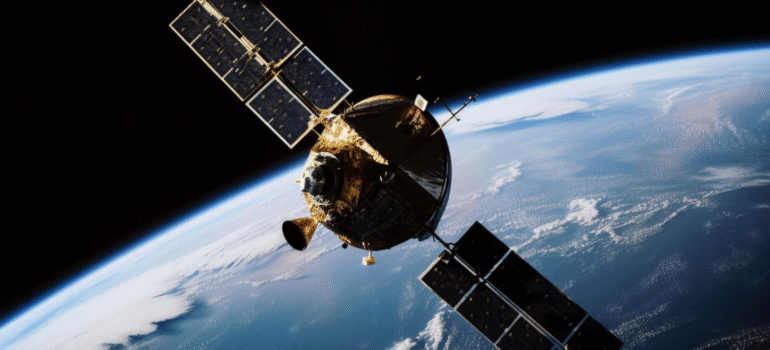
In 2026, traditional broadcasters are facing a hardware crisis. To make room for faster 5G and 6G wireless networks, national regulators have been reallocating the Upper C-Band spectrum (the frequencies satellites use to beam TV signals to your home).
With less “space” in the sky, satellite signals are becoming more compressed and more expensive for broadcasters to maintain. The result? Major networks are ditching the sky and moving their high-bitrate “Master Feeds” to terrestrial IP networks.
Translation: The highest quality 4K and 8K signals are now being delivered through the internet, not the dish on your roof.
The “Spoiler” Problem: Solving Latency in 2026
In the early days of streaming, delay was the enemy. If you were streaming, you were “behind” the live action.
Not anymore. Thanks to Ultra-Low Latency (ULL) technology, 2026 has reached a tipping point. Modern IP distribution can now deliver a “glass-to-glass” delay of sub-3 seconds.
At MyDesiPTV, we have optimized our 2026 infrastructure to prioritize these low-latency routes. When you watch a match on our platform:
-
You see the wicket fall before the social media notification hits your phone.
-
You see the boundary before your neighbor’s legacy cable box has even processed the signal.
-
You are in perfect sync with the live roar of the stadium.
Visit: IPL 2026 Streaming Guide: How to Watch Live Cricket on Firestick in HD
Why IP is Better for “Mega-Events”?
Why are broadcasters for the FIFA World Cup 2026 and the T20 World Cup leaning so heavily into streaming?
1. Unlimited “Regional” Feeds
Satellite has a fixed number of channels. But IP is infinite. This year, we are seeing more regional commentary than ever before. Whether you want the T20 World Cup in Hindi, Urdu, Tamil, or Telugu, IP allows us to provide every single audio feed simultaneously—something a satellite box simply cannot handle.
2. Interactive “Live-Overlays”
2026 is the year of Interactive TV. On our digital platform, you don’t just watch the game; you can see real-time player stats, win probabilities, and “Zoned-In” camera angles that you can toggle with your remote.
3. Resilience to “Rain Fade”
We’ve all been there: a heavy storm starts, and your satellite signal “pixels out” just as the match reaches the final over. Since our signals are delivered via fiber and high-speed IP, “Rain Fade” is a thing of the past. Your stream stays steady, rain or shine.
Visit: Cricket Calendar 2026: Every Major Tournament You Can Stream This Year
Conclusion: Don’t Get Left in the Dark
The “Mega-Stream” isn’t just a trend; it’s a necessity. As the C-Band continues to be repurposed for mobile data, satellite TV will continue to become more expensive and lower in quality.
2026 is the year to cut the cord and move to a platform built for the future. With MyDesiPTV, you aren’t just watching a stream—you are watching the fastest, clearest, and most advanced version of live television ever created.